
Substrates for ICP-RIE Nanofabrication
Inductively Coupled Plasma Reactive Ion Etching (ICP-RIE) is widely used in nanofabrication, semiconductor processing, MEMS fabrication, photonics, microfluidics, and advanced thin-film patterning. The process uses high-density plasma to etch materials with excellent anisotropy, selectivity, and sidewall control.
Choosing the correct substrate is important for ICP-RIE because etch rate, surface roughness, masking performance, sidewall profile, and process uniformity can vary depending on the wafer material and film stack. Researchers commonly use silicon wafers, thermal oxide wafers, silicon nitride wafers, fused silica wafers, and sapphire substrates for plasma etching research.
What Substrate Should You Use for ICP-RIE?
The best wafer for ICP-RIE depends on the material being etched and the final device application. Silicon is commonly used for semiconductor devices and MEMS structures, while fused silica is often chosen for optical, photonic, and transparent microstructure applications. Sapphire is selected when researchers need chemical stability, hardness, optical transparency, and high-temperature performance.
150mm fused silica and sapphire wafers have recently been used by university researchers in an ICP-RIE system for nanofabrication and advanced plasma etching process development.
Reference #270026 for specifications and pricing.
Get Your Quote FAST! Or Buy Online and Start Researching Today!
Common ICP-RIE Wafer Materials
- Silicon Wafers: Used for MEMS devices, semiconductor processing, trench etching, microstructures, and process development.
- Thermal Oxide on Silicon: Used for oxide etch testing, masking layers, dielectric patterning, and silicon dioxide process development.
- Silicon Nitride on Silicon: Used for dielectric etching, hard masks, membrane fabrication, photonics, and low-stress thin-film structures.
- Fused Silica Wafers: Used for optical devices, microfluidic chips, transparent substrates, and photonic structures.
- Sapphire Wafers: Used for high-hardness substrates, optical windows, LED research, GaN growth, and high-temperature applications.
ICP-RIE Applications
ICP-RIE is used to fabricate high-aspect-ratio microstructures, nanoscale patterns, optical waveguides, MEMS devices, sensors, semiconductor test structures, and photonic components. UniversityWafer can help researchers select wafers with the correct diameter, thickness, orientation, resistivity, polish, oxide thickness, nitride thickness, and surface quality for ICP-RIE testing and nanofabrication.
Inductively Coupled Plasma Reactive Ion Etching (ICP-RIE)
Inductively Coupled Plasma Reactive Ion Etching (ICP-RIE) is a high-density plasma etching process used in semiconductor fabrication, MEMS processing, nanofabrication, photonics, and thin-film patterning. ICP-RIE provides high etch rates, anisotropic sidewalls, strong process control, and excellent selectivity when etching materials such as silicon, silicon dioxide, silicon nitride, sapphire, fused silica, GaN, and other advanced substrates.
Unlike standard reactive ion etching, ICP-RIE uses an inductively coupled plasma source to generate a dense plasma while independently controlling ion energy at the wafer surface. This makes it useful for deep etching, low-damage processing, microstructure fabrication, optical device patterning, and advanced research applications that require precise material removal.
Silicon Wafers for ICP-RIE Testing
The following silicon wafer specifications can be used for ICP-RIE testing, plasma etching process development, thin-film patterning, and nanofabrication research. Click the Item # link to order available wafers online.
| Item # | Diameter | Type/Dopant | Orientation | Resistivity (Ω·cm) | Thickness | Polish | Film / Notes |
|---|---|---|---|---|---|---|---|
| 2103 | 100mm | P/B | [100] | 0-100 | 500µm | SSP | 1,000nm Thermal Oxide |
| 1922 | 100mm | P/B | [100] | 0.0001-0.005 | 500µm | SSP | 100nm Super Low Stress LPCVD Nitride |
| 809 | 100mm | N/Ph | [100] | 1-10 | 500µm | SSP | Standard N-Type Test Wafer |
Please contact us if you need different ICP-RIE test wafer specifications, including thermal oxide wafers, silicon nitride wafers, fused silica wafers, sapphire substrates, or custom silicon wafer diameters and thicknesses.
Used Reactive Ion Etching Equipment
UniversityWafer may also have used reactive ion etching equipment available for research labs, universities, and process development facilities. Availability can change, so please request current details, photos, configuration, and pricing.
| TEGAL 903 |
TEGAL 903 RIE SystemCassette-to-cassette reactive ion etcher configured for 4 inch wafers. Includes Fomblin-prepped direct drive vacuum pump. Does not include Fomblin oil. |
|---|---|
|
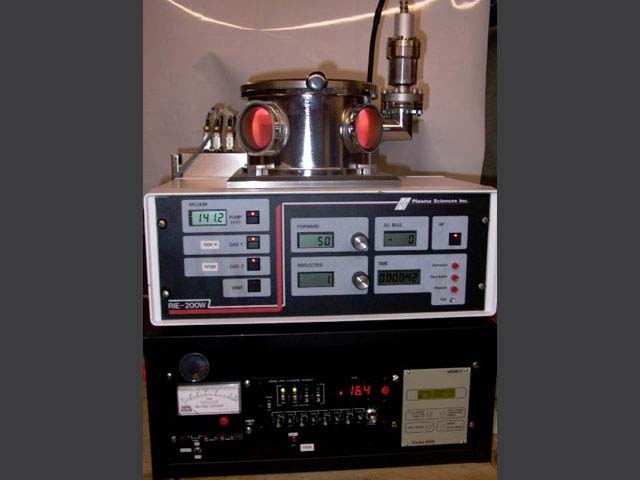
Plasma Sciences RIE 200WTabletop reactive ion etcher for one wafer up to 6 inches in diameter per cycle. Turbo pumped, microprocessor controlled, and supplied with a rebuilt roughing pump. |
|
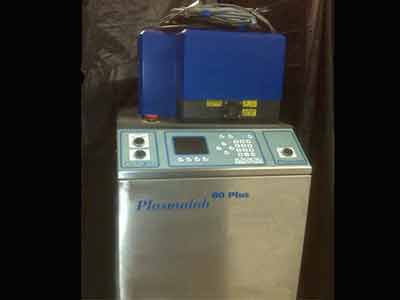
Oxford 80 Reactive Ion EtcherOpen-design RIE system for fast wafer loading. Includes rebuilt two-stage vacuum pump. Four MFC gas control system and turbo pump options may be available. |
|
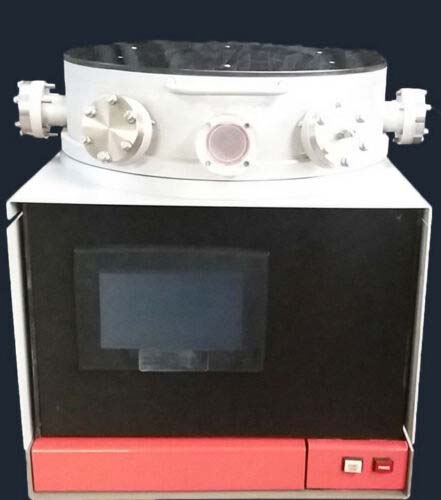
Technics PEIIA Plasma SystemPlasma etcher with three manual gas inputs. Processes five 4 inch wafers per cycle, or multiple 3 inch wafers. Includes rebuilt two-stage vacuum pump, Advanced Energy P1000 power supply, and new PLC control system. |
|
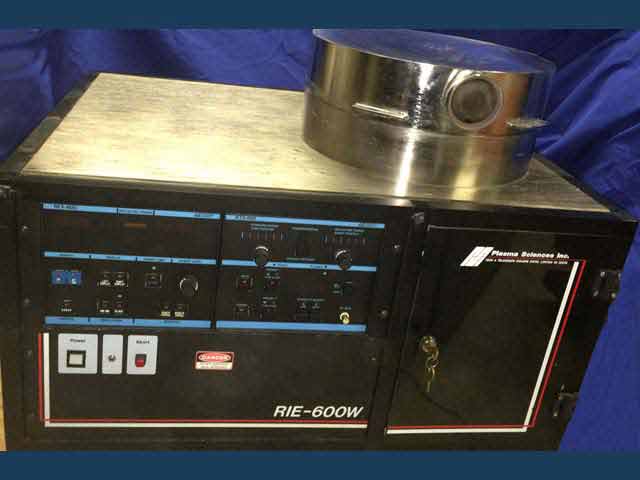
Plasma Sciences RIE 600W for 12 Inch Wafers600 watt reactive ion etching system with turbo pump, mechanical pump, manual gas valves, and video demonstration available upon request. |
ICP-RIE Applications
ICP-RIE is commonly used for semiconductor device fabrication, MEMS structures, silicon photonics, microfluidics, compound semiconductor processing, optical waveguide fabrication, and nanoscale pattern transfer. The process is especially useful when researchers need high-aspect-ratio etching, smooth sidewalls, controlled selectivity, and compatibility with advanced wafer materials.