
The researcher requested 50.8 mm C-plane sapphire wafers with information regarding miscut angle, thickness, polishing specifications, and pricing for quantities ranging from 50 to 10,000 wafers.
Optical Device Substrates for Photonics and Optoelectronics
Modern optical devices rely on high-quality substrates with precise optical, thermal, and mechanical properties. Applications such as silicon photonics, VCSELs, photodiodes, waveguides, optical sensors, LEDs, and laser systems require carefully selected wafer materials to achieve low optical loss, high transmission, and reliable device performance.
UniversityWafer supplies a wide range of substrates for optical device fabrication, including sapphire wafers, SOI wafers, GaN substrates, InGaAs wafers, fused silica substrates, and specialty glass wafers for advanced photonics research.
Sapphire Wafers for Optical Device Fabrication
Sapphire (Al₂O₃) is one of the most widely used optical substrate materials due to its excellent transparency, chemical stability, high thermal conductivity, and exceptional hardness. Sapphire substrates are commonly used for LEDs, laser diodes, optical windows, sensors, and epitaxial growth of III-V semiconductor materials.
A PhD optical engineering candidate requested pricing for 2-inch single crystal sapphire substrates that were suitable for optical device fabrication and epitaxial growth.
Reference #2468274 for specifications and pricing.
Get Your Quote FAST! Or Buy Online and Start Researching Today!
InGaAs Wafers for Photodiodes and VCSEL Devices
Indium Gallium Arsenide (InGaAs) is a semiconductor material commonly used in infrared photodetectors, optical communication systems, VCSELs, photodiodes, and high-speed optoelectronic devices. Its excellent infrared sensitivity makes it particularly valuable in telecommunications and sensing applications.
A senior optical device engineer requested information regarding residual GaAs and InP/InGaAs epitaxial structures for optical devices such as VCSELs and photodiodes.
Reference #131359 for specifications and pricing.
Glass Wafers for Optical Bonding Applications
Optical devices frequently require transparent substrates that can be bonded to silicon using UV-curable epoxies or wafer bonding processes. Materials such as Borofloat 33 and Pyrex offer excellent flatness, thermal stability, and optical transparency.
A communications device manufacturer requested 150 mm and 200 mm glass wafers for bonding to 8-inch silicon wafers using UV-curable epoxy in optical device fabrication.
Reference #162167 for specifications and quantity.
SOI Wafers for Silicon Photonics
Silicon-on-Insulator (SOI) wafers are among the most important substrates for silicon photonics. The buried oxide layer provides optical isolation while the device layer supports waveguides, modulators, resonators, and photonic integrated circuits.
A nanotechnology researcher requested information about SOI wafer thickness consistency, surface quality, and data sheets for optical device fabrication using a 340 nm device layer and 1 µm buried oxide.
Reference #169573 for specifications and pricing.
GaN Substrates for Optical and Photonic Devices
Gallium Nitride (GaN) is widely used in LEDs, laser diodes, UV photonics, and high-performance optoelectronic devices. GaN grown on silicon or sapphire enables the fabrication of efficient optical devices with excellent thermal and electronic properties.
A PhD student requested guidance regarding undoped GaN layers, AlN buffer layers, and GaN-on-silicon structures for low-absorption optical devices.
Reference #221211 for specifications and pricing.
Fused Silica Wafers for Optical Components
Fused silica is one of the most popular materials for optical device fabrication because of its high transparency, low thermal expansion, and excellent transmission across ultraviolet, visible, and infrared wavelengths.
A research associate requested 2-inch and 4-inch fused silica wafers for optical devices requiring visible-light transparency and metal deposition on one surface.
Reference # for specifications and pricing.
Silicon Nitride Wafers for Optical Devices
Silicon nitride (Si3N4) is widely used in optical device fabrication because it offers low optical loss, good thermal stability, and compatibility with silicon-based processing. Researchers often use silicon nitride on silicon wafers to fabricate optical waveguides, photonic integrated circuits, resonators, sensors, and other silicon photonics devices.
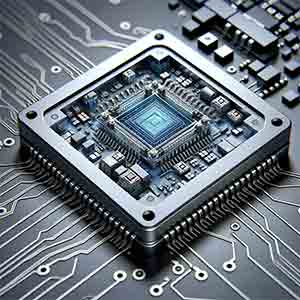
A graduate student in an ECE department requested wafers consisting of a stoichiometric LPCVD Si3N4 layer isolated from the silicon substrate by a silica layer. The requested structure included approximately 200–300 nm of silicon nitride and about 3 µm of silicon dioxide, suitable for optical waveguide research.
The researcher wanted to fabricate optical devices and asked about the optical characteristics of SiN layers, pricing based on film thickness, lead time, and minimum wafer quantity. They preferred 3 inch silicon wafers, with 2 inch to 4 inch diameters also acceptable. They also asked whether thermal oxide coated silicon wafers could be supplied.
Reference #105508 for specs and pricing.
Thermal Oxide and Silicon Nitride Waveguide Wafers
Thermal oxide on silicon is often used as a lower cladding layer in optical waveguide fabrication. A thick silicon dioxide layer helps isolate the optical mode from the silicon substrate, while a top silicon nitride layer can serve as the waveguide core.
An electrical engineering graduate student requested a 6 µm thermal oxide layer on silicon followed by a 250 nm stoichiometric Si3N4 film. The goal was to use the top nitride layer as an optical waveguide and the lower oxide as the cladding layer, with low optical absorption in the nitride film.
I will be making optical devices using the top nitride layer as a waveguide and the lower oxide as a cladding layer. Therefore, I need the optical absorption in the nitride film to be as low as possible. Are your nitride films of optical quality?
Reference #109912 for specs and pricing.
What Are Optical Devices?
Optical devices are components or systems that generate, guide, transmit, detect, filter, or manipulate light. In research and semiconductor manufacturing, optical devices are often fabricated on wafers and substrates with carefully controlled optical properties such as refractive index, transparency, absorption, surface roughness, and thermal stability.
Common optical and photonic devices include:
- Optical waveguides
- Photonic integrated circuits
- Laser diodes
- LED structures
- Photodiodes and photodetectors
- Optical sensors
- Modulators
- Infrared detectors
- Micro-optical components
- Fiber optic communication devices
Substrates Used to Fabricate Optical Devices
Optical device substrates are selected based on transmission range, refractive index, absorption, thermal expansion, surface quality, and compatibility with thin-film deposition or photolithography. The best substrate depends on whether the device is designed for visible, ultraviolet, infrared, telecommunications, or silicon photonics applications.
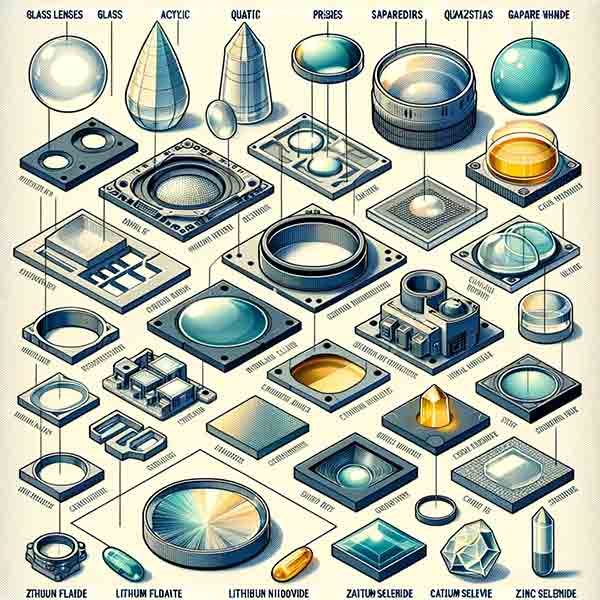
- Glass Wafers: Used for lenses, windows, optical covers, microfluidics, sensors, and transparent device platforms.
- Silicon Wafers: Common in silicon photonics, infrared optics, photodetectors, MEMS, and optoelectronic devices.
- Fused Silica Wafers: Selected for ultraviolet transmission, low thermal expansion, high purity, and precision optical applications.
- Sapphire Wafers: Used for durable optical windows, GaN growth, LEDs, sensors, and high-temperature optical devices.
- Germanium Wafers: Used for infrared optics, thermal imaging, IR detectors, and night vision systems.
- Zinc Selenide (ZnSe): Used in infrared optics, CO2 laser windows, and low-absorption IR optical components.
- Lithium Niobate (LiNbO3): Used for electro-optic modulators, nonlinear optics, frequency conversion, and photonic devices.
- Gallium Arsenide (GaAs): Used for lasers, LEDs, photodiodes, VCSELs, and high-speed optoelectronic devices.
Best Silicon Doping for Optical Device Fabrication
The best silicon doping for optical devices depends on whether the wafer is being used mainly as a mechanical platform, an optical waveguide layer, a photodiode junction, or an electrically active semiconductor device. For many silicon photonics and optical waveguide applications, lower doping is preferred because heavy doping can increase free-carrier absorption and reduce optical performance.
Question: Do you know if these wafers are appropriate for optical devices in terms of doping? RFQ #220012.
For optical waveguides and passive photonic structures, researchers often choose lightly doped or high-resistivity silicon to reduce optical absorption. For active optical devices such as photodiodes, modulators, and solar cells, controlled n-type or p-type doping may be required to create junctions and tune electrical behavior.
- Lightly doped silicon: Often preferred for passive optical waveguides and low-loss photonic devices.
- High-resistivity silicon: Useful when reduced free-carrier absorption or electrical isolation is important.
- P-type boron-doped silicon: Used in p-n junctions, photodiodes, and certain optoelectronic devices.
- N-type phosphorus-doped silicon: Used where electron conduction or n-type junction behavior is required.
UniversityWafer can help researchers select silicon, oxide-coated silicon, silicon nitride, sapphire, fused silica, GaAs, germanium, and other substrates for optical device fabrication, photonics research, infrared optics, and semiconductor device development.