I want to use silicon carbide for integrated photonic components and devices such as waveguides and ring resonators. I am interested in 4H silicon carbide on insulator (4H-SiCOI) wafers consisting of 4H-SiC thin films bonded to SiO2 on silicon carrier wafers. The wafers should be insulating, 0° off-axis, with thermally grown SiO2 at least 1 µm thick. Diameter can be either 2-inch or 4-inch. Quantity required: one wafer.
4H Silicon Carbide on Insulator (4H-SiCOI) Wafers for Photonic Devices
4H silicon carbide (4H-SiC) substrates are increasingly used for integrated photonic components, waveguides, ring resonators, and quantum photonic devices. Their wide bandgap, excellent thermal conductivity, and low optical losses make silicon carbide one of the most promising materials for next-generation photonics and high-power semiconductor applications.
An Electrical and Computer Engineering Ph.D. candidate requested the following:
Reference #268777 for specifications and pricing.
Applications of Silicon Carbide Wafers
Silicon carbide substrates are widely used in power electronics, photonics, and semiconductor research. Common applications include:
- MOSFETs
- Schottky diodes
- Power transistors
- LEDs
- Photonic integrated circuits
- RF devices
- Quantum technologies
- MEMS and sensors
- GaN epitaxy
UniversityWafer, Inc. supplies high-quality dummy grade, research grade, and custom silicon carbide wafers and ingots for universities, laboratories, and semiconductor manufacturers.
Why buy large quantities if you don't have to? Buy online and save!
Current and Future Uses of Silicon Carbide Devices
Unmanned Aerial Vehicles (UAVs)
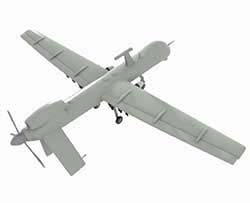 Silicon carbide power devices enable compact and lightweight speed controllers for unmanned aerial vehicles and drone racing systems. Their high efficiency and reduced power loss contribute to longer flight times and increased performance.
Electric Vehicles and Formula E Racing
 SiC power electronics are widely used in electric vehicles, battery charging systems, and Formula E racing. Their lower switching losses and higher operating temperatures help improve inverter efficiency and battery life.
Silicon Carbide Schottky Diodes
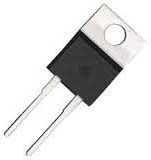 Compared with conventional silicon diodes, silicon carbide Schottky diodes offer lower switching losses, higher efficiency, and improved temperature stability. These advantages make them ideal for power supplies, solar inverters, industrial electronics, and high-frequency power systems.
4H Silicon Carbide (SiC) Wafers for Advanced Semiconductor Research
Silicon carbide (SiC) substrates are widely used in power electronics, photonics, RF devices, and high-temperature semiconductor applications. Compared with conventional silicon wafers, SiC offers higher breakdown voltage, higher thermal conductivity, and lower switching losses, making it ideal for next-generation power devices.
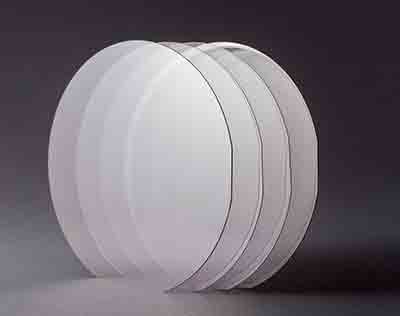 Researchers frequently use 4H-SiC wafers for GaN epitaxy, molecular beam epitaxy (MBE), Schottky diodes, MOSFETs, LEDs, and integrated photonic devices.
Can SiC Wafers Be Used for GaN and InN Epitaxy?
Yes. Silicon carbide substrates are excellent templates for epitaxial growth of GaN and InN by molecular beam epitaxy (MBE), MOCVD, and other thin film deposition methods. Their thermal conductivity and crystal quality make them attractive substrates for high-power and high-frequency devices.
- 6" 4H-N SiC, Dummy Grade
- 6" 4H-N SiC, Research Grade
- 4" 4H-N SiC, Dummy Grade
- 4" 4H-N SiC, Research Grade
- 3" 4H-N SiC, Dummy Grade
- 3" 4H-N SiC, Research Grade
- 2" 4H-N SiC, Dummy Grade
- 2" 4H-N SiC, Research Grade
- 5 mm square samples available
- Dicing services available
Advantages of Silicon Carbide Substrates
- High breakdown electric field
- Excellent thermal conductivity
- Low switching losses
- Operation at elevated temperatures
- High-frequency performance
- Improved energy efficiency
- High power density
- Radiation resistance
Applications of Silicon Carbide Wafers
Single-crystal SiC wafers are used in numerous semiconductor and power applications, including:
- MOSFETs
- Schottky barrier diodes
- IGBTs
- LEDs
- RF amplifiers
- Power modules
- Electric vehicles (EVs)
- Solar inverters
- Uninterruptible power supplies (UPS)
- Photonic integrated circuits
- High-temperature sensors
- Aerospace electronics

Silicon Carbide for Electric Vehicles and Aerospace
SiC power devices are increasingly used in electric vehicles, charging infrastructure, aerospace electronics, and unmanned aerial vehicles (UAVs). Because silicon carbide devices generate less heat and operate more efficiently than conventional silicon devices, they enable smaller, lighter, and more powerful systems.
Silicon carbide MOSFETs and Schottky diodes help improve battery life, increase power density, and reduce cooling requirements in EVs and industrial power systems.
Future Applications of SiC Technology
Future SiC applications include renewable energy systems, electric aircraft, advanced radar systems, high-speed communication devices, and high-power electronics. Silicon carbide substrates continue to play a critical role in the development of next-generation semiconductor technologies.