
We are looking for silicon wafers suitable for fabricating optical silica waveguides. Prime-grade 4-inch SSP wafers with surface roughness below 1 nm are preferred as the starting substrate. Could you quote wafers with 10 µm and 15 µm thermal oxide?
Low Surface Roughness Silicon Wafers for Optical Waveguides and Silicon Photonics
Low surface roughness silicon wafers are essential for silicon photonics, optical communications, photonic integrated circuits (PICs), fiber optic networks, and quantum photonics. Smooth substrates help minimize optical scattering losses and improve the quality of deposited dielectric films used in optical silica waveguides.
A distinguished professor researching silicon photonics requested the following:
Reference #111453 for specifications and pricing.
Get Your Silicon Wafer Quote FAST! Or, Buy Online and start researching today.
SOI Wafers With Surface Roughness of 1–2 nm
Silicon-on-Insulator (SOI) wafers are widely used in MEMS, RF devices, sensors, photonics and advanced semiconductor manufacturing. Many cleanroom processes require double-side polished wafers with extremely low roughness to ensure optimal thin-film deposition and lithography performance.
Typical specifications included:
- Double-side polished surfaces
- Surface roughness between 1 and 2 nm
- <100> orientation
- Carrier wafers with thickness of 400 ± 10 µm
- 4-inch wafer diameter
Reference #176466 for specifications and pricing.
SiC Surface Roughness Characterized by AFM
Researchers developing electric vehicle power devices and wide-bandgap electronics often require silicon carbide wafers with ultra-smooth surfaces and low defect densities.
Requested specifications included:
- 6H-SiC polytype
- 50 mm diameter
- Nitrogen-doped n-type conductivity
- Both faces polished with C-face epi-ready finish
- Surface roughness below 0.5 nm
- Single-wafer packaging
Surface roughness and crystal quality were verified using:
- XRD analysis
- Raman spectroscopy
- SEM thickness analysis
- Atomic Force Microscopy (AFM)
- Micropipe density and FWHM measurements
Reference #202899 for specifications and pricing.
Glass Wafers for Oxide Semiconductor Research
Glass substrates are frequently used for oxide semiconductors, transparent electronics, displays and sensor applications. Surface roughness and electrical resistivity are important parameters for achieving reproducible thin-film growth.
A PhD candidate requested 3-inch and 6-inch glass wafers and additional information regarding surface roughness and electrical resistivity to determine their suitability for oxide semiconductor experiments.
Reference #209421 for specifications and pricing.
Why Surface Roughness Matters for Silicon Wafers
 Surface roughness is one of the most important specifications for silicon wafers, SOI wafers, SiC wafers, glass wafers and optical substrates. A smooth substrate surface helps improve thin-film uniformity, photolithography resolution, device reliability and overall semiconductor manufacturing yield.
Surface Roughness and Semiconductor Device Performance
Low surface roughness is critical for high-performance semiconductor devices because rough surfaces can affect electrical behavior, thin-film adhesion and pattern accuracy.
- Electrical performance: Smooth wafers support more uniform doping profiles and oxide growth.
- Leakage current control: Rough surfaces can increase leakage paths in transistors and electronic devices.
- Device reliability: Low-roughness wafers reduce defect formation during fabrication.
- Yield improvement: Better surface quality helps reduce rejected wafers and processing failures.
Surface Roughness in Photolithography
Photolithography requires smooth, uniform wafer surfaces for accurate pattern transfer. Surface irregularities can distort features, reduce resolution and create defects in semiconductor devices, MEMS structures and photonic components.
Prime-grade silicon wafers, double-side polished wafers and epi-ready substrates are often chosen when tight dimensional control and smooth surfaces are required.
Surface Roughness and Thin-Film Deposition
Thin-film deposition processes such as oxide, nitride, metal and dielectric coating depend heavily on the starting substrate surface. Low roughness improves film adhesion, coating uniformity and optical or electrical performance.
- Thin films deposit more evenly on smooth substrates.
- Oxide and nitride coatings show better uniformity on polished wafers.
- Optical waveguides benefit from low scattering losses.
- Metal films adhere more reliably to smooth surfaces.
Surface Roughness and CMP Planarization
Chemical Mechanical Planarization (CMP) is used to flatten wafer surfaces during semiconductor processing. Starting with a low-roughness wafer can improve CMP efficiency, reduce defect formation and support better multilayer device fabrication.
How Surface Roughness is Measured
Surface roughness is commonly measured using Atomic Force Microscopy (AFM), optical profilometry or interferometry. AFM is frequently used when researchers need nanometer-scale or sub-nanometer surface roughness measurements.
- Ra: Arithmetic average roughness.
- RMS / Rq: Root mean square roughness.
- Peak-to-valley: Height difference between the highest and lowest surface points.
PET Sheet Surface Roughness for Film Deposition
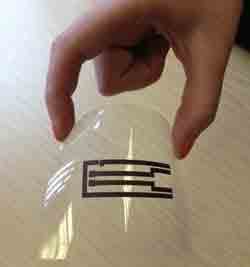 Transparent PET sheets are used as flexible substrates for thin-film deposition, flexible electronics, optical coatings and polymer-based device research. Researchers often request PET substrates with low surface roughness, high transparency and no surface patterns.
A postdoctoral researcher requested transparent Polyethylene Terephthalate (PET) thin sheets for film deposition. The main requirement was a smooth, pattern-free surface suitable for coating experiments.
Reference #211070 for specifications and pricing.
YAG Substrates With RMS Roughness Below 1 nm
Yttrium Aluminum Garnet (YAG) substrates are used in optical, mechanical and laser-related research. For precision applications, researchers often require prime-grade polish, SSP or DSP surface finish and RMS roughness below 1 nm.
A senior development engineer requested 17 mm YAG disks with prime-grade surface polish. The preferred specification was RMS surface roughness < 1 nm, with either single-side polished or double-side polished surfaces.
Reference #221322 for specifications and pricing.
Substrates That Commonly Require Low Surface Roughness
- Prime-grade silicon wafers
- Double-side polished silicon wafers
- SOI wafers
- Silicon carbide wafers
- Glass wafers
- Quartz wafers
- Sapphire wafers
- PET thin sheets
- YAG optical substrates